
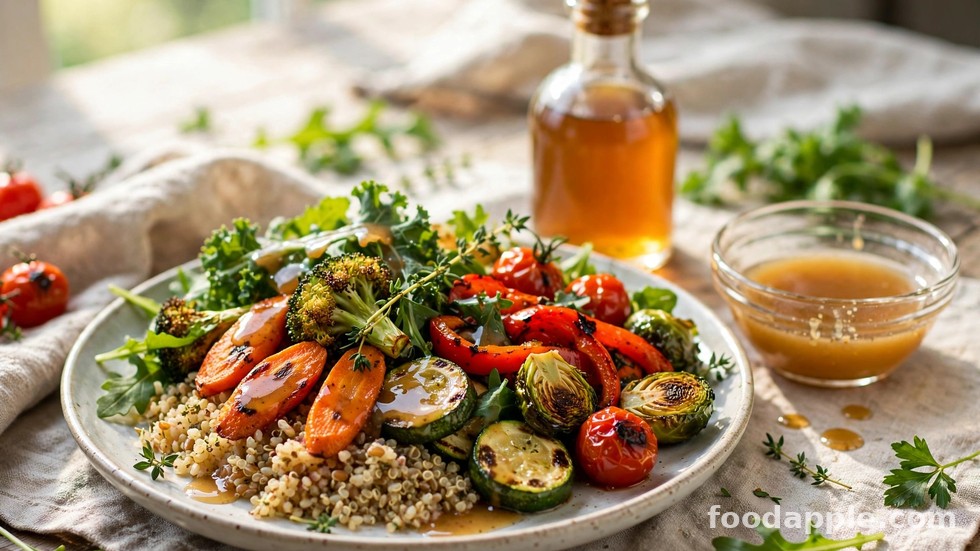
You can eat the healthiest diet in the world and still miss its benefits — because what matters is what your body actually absorbs. Absorption depends on stomach acidity, enzymes, gut bacteria, and food combinations, and small inefficiencies add up. Research suggests apple cider vinegar, taken with or before meals, may help your body extract more nutrition from food you already eat. Here is the science, which nutrients benefit most, and practical ways to pair ACV with meals.
Table of Contents
- Nutrient Absorption Basics: Why It Is Not Automatic
- The Role of Acidity in Digestion
- How ACV May Improve Mineral Uptake
- Blood Sugar Stability and Nutrient Use
- Gut Microbiome and the Mother Culture
- Practical Ways to Pair ACV with Meals
- Frequently Asked Questions
Nutrient Absorption Basics: Why It Is Not Automatic
Digestion is a multi-stage extraction process. Food is broken down by stomach acid and enzymes, then further processed in the small intestine, where nutrients cross into the bloodstream with help from transport proteins, bile, and gut bacteria. At every stage, things can go sub-optimally: low stomach acid (common with age and with acid-reducing medications), rushed eating, gut inflammation, and nutrient competition between foods can all reduce how much you actually absorb.
Two people can eat the same meal and absorb different amounts from it. Bioavailability — the proportion of a nutrient your body can use — varies enormously. Iron from spinach is absorbed at far lower rates than iron from meat, partly because phytates and oxalates bind minerals. Anything that improves the digestive environment shifts these numbers in your favor.
The Role of Acidity in Digestion
Stomach acid does far more than most people realize. Beyond killing pathogens, an acidic stomach environment unfolds proteins so enzymes can dismantle them, releases minerals like iron, calcium, magnesium, and zinc from food matrices, and activates pepsin, the chief protein-digesting enzyme. When stomach acidity is suboptimal — increasingly common after age 50 — protein digestion and mineral extraction both suffer.
This is where vinegar’s acidity helps. Acetic acid mildly lowers digestive pH when taken with meals, supporting the acid-dependent steps of digestion — particularly mineral release from plant foods. It will not fix clinically low stomach acid on its own, but as a mealtime aid it nudges conditions in the right direction.
How ACV May Improve Mineral Uptake
Iron: The Standout Case
The strongest evidence involves iron: adding vinegar to a meal significantly increases non-heme iron absorption from plant foods. Acidity converts iron into its more absorbable form and counteracts the binding effect of phytates in grains and legumes. For vegetarians and anyone borderline iron-deficient, a vinegar-based dressing on a lentil or spinach salad is a genuinely smart pairing.
Calcium, Magnesium, and Zinc
These minerals also depend on an acidic environment for release from food. Calcium from leafy greens, magnesium from nuts and whole grains, and zinc from legumes are all absorbed more efficiently when stomach pH is appropriately low. Animal studies on vinegar intake have reported improved calcium absorption and bone mineral retention, suggesting the effect extends beyond iron — though human trials specifically on ACV and these minerals are still limited.
B Vitamins and Protein Breakdown
Efficient protein digestion matters for amino acid availability and vitamin B12, which stomach acid must cleave from food proteins before absorption. By supporting the acidic phase of digestion, mealtime ACV may modestly improve protein breakdown — relevant for older adults and anyone on long-term acid-suppressing medication.
Blood Sugar Stability and Nutrient Use
There is a second, indirect route: ACV’s well-documented effect on post-meal blood sugar. By slowing gastric emptying and blunting glucose spikes, acetic acid creates a steadier metabolic environment after eating. Why does this matter for nutrients? Because high insulin spikes drive magnesium and chromium excretion, and blood sugar rollercoasters increase oxidative stress that depletes antioxidant nutrients like vitamin C and E. Steadier blood sugar means your body holds onto its micronutrients better.
In other words, ACV may help both sides: extracting more nutrients during digestion and wasting fewer afterward. Neither effect is dramatic alone, but compounded over every meal, every day, the difference becomes meaningful.
Gut Microbiome and the Mother Culture
Raw, unfiltered ACV contains the mother — a culture of acetic acid bacteria and fermentation byproducts. While it is not a concentrated probiotic, regularly consuming fermented foods supports a diverse gut microbiome, and gut bacteria play a direct role in nutrient absorption: they synthesize vitamin K and B vitamins, ferment fiber into short-chain fatty acids that nourish the gut lining, and influence the integrity of the intestinal barrier through which nutrients pass.
Vinegar’s mild antimicrobial properties may also keep less desirable gut microbes in check, while its polyphenols feed beneficial bacteria. A healthier gut lining absorbs nutrients more efficiently — the foundation of the entire process.
Practical Ways to Pair ACV with Meals
- The pre-meal drink: 1 tablespoon of ACV in a large glass of water, 10–15 minutes before main meals — the timing used in most research.
- Vinaigrette on salads and grain bowls: Whisk 1 part ACV with 2–3 parts olive oil, plus mustard and herbs. This pairs the acidity directly with mineral-rich greens, lentils, and beans — and the olive oil boosts absorption of fat-soluble vitamins A, D, E, and K.
- On legume and whole-grain dishes: A splash of ACV over lentils, chickpeas, or brown rice helps counteract phytates and brightens flavor — a staple trick in many traditional cuisines.
- With iron-rich plant meals: Pair ACV with spinach, lentils, tofu, or fortified cereals to maximize non-heme iron uptake — and add a vitamin C source (lemon, bell peppers) for a compounding effect.
- What to avoid pairing: Do not take ACV at the same time as antacids or acid-reducing medication — they work in opposite directions. Space them at least 2 hours apart, and discuss regular use with your doctor if you take these drugs.
Frequently Asked Questions
Does ACV really help you absorb more iron?
Yes — this is the best-supported claim. Studies show that vinegar added to a meal increases non-heme iron absorption from plant foods, by improving iron solubility and counteracting phytates. The effect is most valuable for vegetarians, vegans, and anyone with borderline iron levels.
Should I take ACV before or after meals for better absorption?
Before or with meals — that is when the acidity can participate in digestion. Taking it long after eating misses the window when food is being broken down. Ten to fifteen minutes before your meal, or as a vinaigrette on the meal itself, are the two ideal approaches.
Can ACV replace digestive enzyme supplements?
No. ACV supports the acidic environment enzymes work in, but supplies no enzymes itself. People with pancreatic insufficiency or severe digestive disorders need proper medical treatment.
Will ACV interfere with my medications’ absorption?
Possibly. ACV can alter stomach pH and slow gastric emptying, affecting how some drugs — including diabetes medications, diuretics, and certain heart drugs — are absorbed. Take medications and ACV at least 2 hours apart, and check with your pharmacist.