
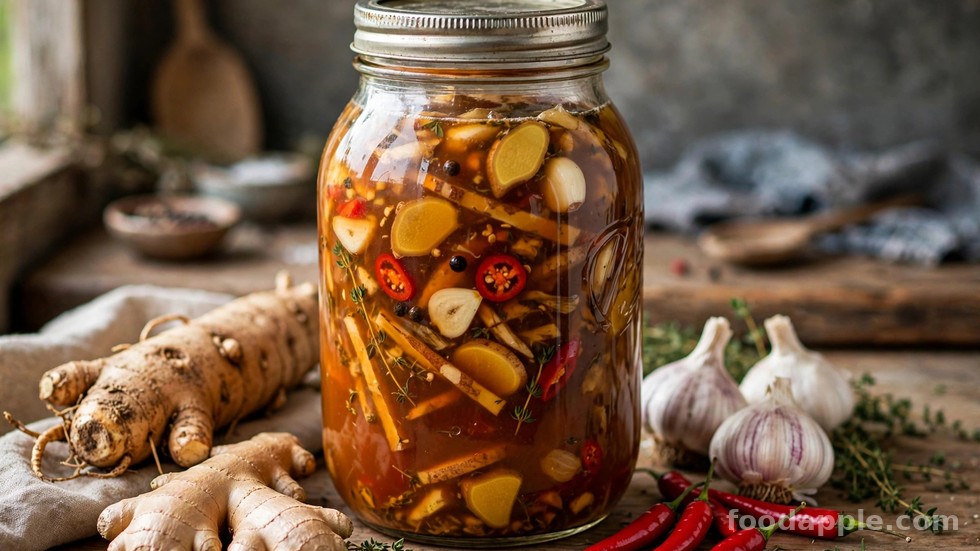
Fire cider is a pungent, warming apple-cider-vinegar infusion of horseradish, ginger, garlic, onion, and hot peppers — a folk favorite for warding off winter colds. This guide gives you the classic recipe with exact ratios, a 4-week infusion method, dosing and storage rules, smart variations, and an honest look at what it can and can’t do for immunity.
In This Article
- What Is Fire Cider?
- Ingredients & Ratios
- The Classic Fire Cider Recipe (Step by Step)
- The 4-Week Infusion: What to Expect
- Straining, Finishing & Honey
- How to Take It: Dosing Guide
- Tried-and-True Variations
- Storage & Shelf Life
- Safety Notes & Who Should Skip It
- Frequently Asked Questions
What Is Fire Cider?
Fire cider is a raw apple cider vinegar infusion of pungent roots, alliums, citrus, and hot peppers, sweetened with honey after straining. Popularized in the 1970s by herbalist Rosemary Gladstar, it is now a staple of home apothecaries.
Vinegar extracts the pungent compounds — gingerols, allicin precursors, capsaicin — into a fiery tonic people take by the spoonful at the first tickle of a sore throat. One honest note: fire cider has never been tested in clinical trials for colds. Its reputation rests on tradition; think of it as a warming ritual, not medicine.
Ingredients & Ratios
This classic formula fills one half-gallon (2-liter) jar. Use organic produce when possible, and raw, unfiltered ACV with the “mother.”
- 1 large horseradish root (~½ cup grated) — the signature heat
- 1 large ginger root (~½ cup grated) — warming cold remedy
- 1 whole head of garlic (~¼ cup crushed) — pungent folk antimicrobial
- 1 medium onion (~¼ cup chopped) — cold-season ally
- 2–3 hot peppers (jalapeño, cayenne, or habanero) — adjust to taste
- 1 lemon (sliced) and 1 orange (sliced) — vitamin C and brightness
- 2–3 sprigs fresh rosemary or thyme — aromatic depth
- 1 tablespoon black peppercorns — piperine warmth
- Raw apple cider vinegar — enough to fully cover everything (about 4–5 cups)
- Raw honey — added after straining, to taste (about ¼–⅓ cup)
A word on the vinegar: raw, unfiltered ACV with the mother is traditional. For a gentler daily vinegar habit while your fire cider brews, see top 5 ACV morning detox drinks you can make in 2 minutes.
The Classic Fire Cider Recipe (Step by Step)
Step 1 — Prep the roots
Scrub (don’t peel) the horseradish and ginger, then grate coarsely. Wear gloves for horseradish and peppers, and avoid touching your eyes. Crush the garlic lightly and chop the onion.
Step 2 — Fill the jar
Pack everything into a clean half-gallon glass jar, leaving about 2 inches of headspace.
Step 3 — Cover with vinegar
Pour raw ACV over everything until solids are submerged by at least an inch — exposed plant material can mold. With metal lids, slip parchment between lid and jar; vinegar corrodes metal.
Step 4 — Seal and shake
Seal, date, and store in a cool, dark place. Shake daily the first week, then every few days, topping up with vinegar if solids are exposed.
The 4-Week Infusion: What to Expect
Four weeks is the traditional minimum — enough time for the vinegar to pull pungent compounds from dense roots:
- Days 1–7: Pale golden color, sharp nose-tingling aroma. Shake daily.
- Weeks 2–3: Deep amber; flavors meld, heat intensifies. Usable in a pinch, but longer is better.
- Week 4: Full-bodied and fiery; the solids look pale and spent — time to strain.
Some makers infuse 6–8 weeks for extra strength; beyond two months, returns diminish and flavor turns muddy.
Straining, Finishing & Honey
Strain through a fine-mesh sieve or cheesecloth, pressing firmly to extract every drop. Compost the spent solids — or dehydrate them into a spicy seasoning salt. The strained vinegar should be fiercely pungent.
Stir in ¼ to ⅓ cup of raw honey until dissolved — it rounds the edges without making it sweet; fire cider should still bite back. Bottle in clean glass jars or swing-top bottles.
How to Take It: Dosing Guide
- Daily maintenance: 1 tablespoon in the morning, straight or in warm water, through cold season.
- First sign of a cold: 1 tablespoon every few hours for a day or two.
- In food: Use as a salad-dressing base, splash over roasted vegetables, or stir into soups — a genuinely good condiment.
Start with 1 teaspoon — the horseradish heat is no joke. For more winter vinegar tonics, see ACV tonic recipes for boosting immunity during winter.
Tried-and-True Variations
- Turmeric fire cider: Add ¼ cup sliced fresh turmeric root and a teaspoon of black pepper for a golden, earthy version.
- Milder batch: Halve the horseradish and peppers, double the citrus and honey — flavorful but less aggressive.
- Elderberry twist: Add ½ cup dried elderberries during infusion for a darker, fruitier brew.
Prefer your ACV in something gentler? 5 easy smoothies powered by apple cider vinegar are a friendlier daily dose.
Storage & Shelf Life
Thanks to vinegar’s acidity, finished fire cider is very shelf-stable: store in a cool, dark cupboard for up to a year, or refrigerate for brighter flavor. Use clean utensils when pouring; if you see mold, off-smells beyond normal pungency, or fizzing in a sealed bottle, discard the batch.
Safety Notes & Who Should Skip It
Fire cider is food, not medicine — but potent food:
- Pregnant or breastfeeding? Talk to your doctor first; some of these herbs aren’t well studied in pregnancy.
- Acid reflux or ulcers? Vinegar and hot peppers can aggravate GERD, gastritis, and ulcers.
- Kids: Standard fire cider is too hot for young children — see our age guidelines first.
- Medications: Vinegar may affect potassium and interact with diuretics and diabetes drugs; garlic in quantity can thin the blood — mention it if you take blood thinners.
- Never give honey-containing fire cider to infants under 12 months (botulism risk).
Frequently Asked Questions
Does fire cider actually boost immunity?
There’s no clinical evidence it prevents colds. Its ingredients have folk reputations and some lab-study support, but the tonic itself has never been trialed — enjoy it as a warming ritual, not a shield.
Can I use white vinegar instead of apple cider vinegar?
You can, but you’ll lose the apple polyphenols and traditional flavor. Raw, unfiltered ACV with the mother is the classic choice.
Why did my fire cider turn cloudy?
Cloudiness is usually the mother reforming or fine sediment — harmless; shake before using. True mold (fuzzy spots on exposed solids) means discard the batch.
How long does fire cider last?
About a year in a dark cupboard, longer refrigerated. The vinegar’s acidity keeps it safe.
Can I take fire cider every day?
A daily tablespoon is the traditional maintenance dose, fine for most healthy adults. With reflux, medications, or pregnancy, check with your doctor first.