
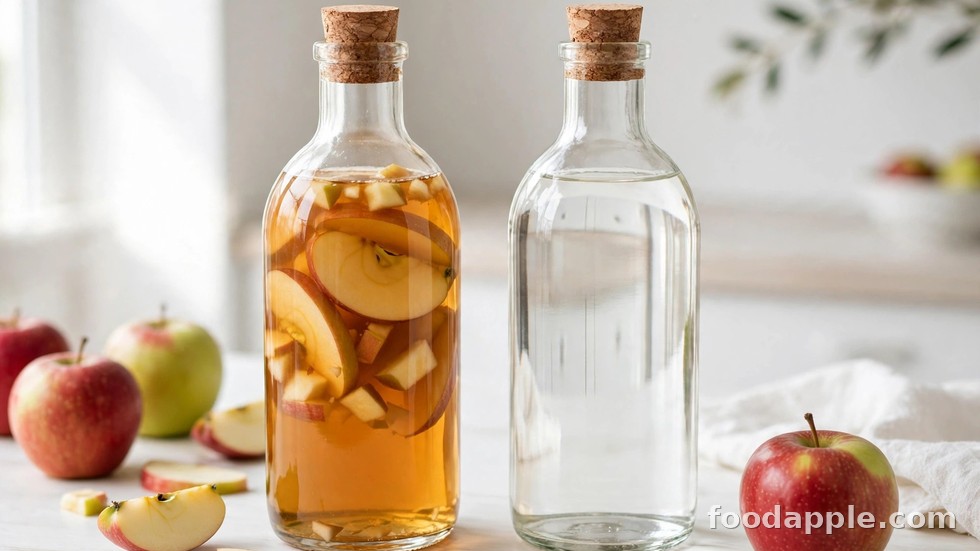
Walk down any grocery aisle and you will find two vinegars sitting side by side: apple cider vinegar and white vinegar. They look similar, they both contain acetic acid, and they are often used interchangeably in recipes — but they are fundamentally different products with different origins, nutrients, flavors, and best uses. Choosing the wrong one can ruin a recipe or mean missing out on health benefits. This guide breaks down every important difference between apple cider vinegar and white vinegar, so you always reach for the right bottle.
- How Each Vinegar Is Made
- Nutritional Differences
- Taste and Flavor Profile
- Health Benefits Compared
- Cooking: When to Use Which
- Cleaning and Household Uses
- Can You Drink White Vinegar for Health?
- Which Vinegar Should You Buy? A Decision Guide
- Side-by-Side Comparison
- Frequently Asked Questions
How Each Vinegar Is Made
Apple cider vinegar is made by fermenting crushed apple juice. First, yeast converts the apple sugars into alcohol; then bacteria convert that alcohol into acetic acid. Raw, unfiltered ACV retains the “mother” — a cloudy culture of beneficial bacteria and enzymes. White vinegar (distilled vinegar), by contrast, is typically made from fermented grain alcohol that is then distilled to produce a clear, highly purified vinegar with a higher acidity level, usually around 5–7% acetic acid compared to ACV’s ~5%.
Nutritional Differences
This is where the two diverge sharply. Because ACV comes from whole apples, it retains trace amounts of potassium, antioxidants (polyphenols), amino acids, and beneficial bacteria from fermentation. White vinegar, being distilled, is essentially pure acetic acid and water — it contains virtually no nutrients beyond the acid itself. If you are drinking vinegar for health, ACV is the clear winner.
Taste and Flavor Profile
ACV has a mellow, slightly sweet, fruity flavor with apple notes that blend beautifully into dressings, marinades, and drinks. White vinegar tastes sharper, harsher, and more aggressively acidic with no fruity character. In recipes where vinegar flavor is front and center — like vinaigrettes or drinking tonics — ACV is far more pleasant. White vinegar’s strong punch works better when you want acidity without competing flavors, such as pickling or deglazing.
Health Benefits Compared
Most research on vinegar’s health effects — blood sugar control, appetite reduction, antimicrobial action — comes from studies on acetic acid itself, which both vinegars contain. So white vinegar shares the basic metabolic benefits. However, ACV’s extra probiotics, enzymes, and antioxidants give it an edge for gut health, immune support, and skin applications. No studies suggest drinking white vinegar for wellness, and its harsher profile makes it less suitable for regular consumption.
Cooking: When to Use Which
Use apple cider vinegar for salad dressings, coleslaw, marinades, barbecue sauces, chutneys, and any dish where a fruity tang complements the flavors. Use white vinegar for pickling (its clarity keeps pickles bright), making buttermilk substitutes, poaching eggs, and recipes where you want clean acidity without flavor interference. As a rule of thumb: if the vinegar will be tasted, choose ACV; if it will be transformed by heat or hidden, white vinegar works fine and costs less.
Cleaning and Household Uses
Here white vinegar takes the crown. Its higher acidity, lower cost, and colorless nature make it ideal for descaling kettles, cleaning windows, deodorizing laundry, and removing limescale. ACV can technically do the same jobs, but it costs more and its amber color can stain light surfaces. Save your ACV for the kitchen and your health routine; keep a big jug of white vinegar under the sink for cleaning.
Can You Drink White Vinegar for Health?
Technically yes, practically no. White vinegar contains the same acetic acid that drives most of vinegar’s studied health effects, so a diluted spoonful won’t harm a healthy adult. But there are three good reasons nobody recommends it as a wellness drink. First, it tastes harsh — the sharp, one-dimensional acidity is unpleasant enough that most people quit within days, killing any chance of a consistent habit. Second, it offers zero of ACV’s bonus compounds: no probiotics, no enzymes, no polyphenols. Third, its higher acidity (up to 7%) is tougher on tooth enamel and throats than ACV’s gentler 5%. If health is your goal, the small price premium for ACV pays for itself in both benefits and drinkability.
Which Vinegar Should You Buy? A Decision Guide
Still unsure which bottle belongs in your cart? Run through this quick checklist:
- You want daily health tonics → Buy raw, unfiltered ACV “with the mother.”
- You make lots of salad dressings → ACV for flavor; keep white vinegar as backup.
- You pickle vegetables → White vinegar — clarity and strength win here.
- You clean with vinegar → White vinegar, the big economical jug.
- You’re on a tight budget → White vinegar covers cooking basics; upgrade to ACV later.
- You want one bottle that does most things → ACV is the versatile all-rounder.
Many well-stocked kitchens keep both: ACV for health and flavor-forward cooking, white vinegar for pickling and cleaning. At their prices, owning both is the best of both worlds.
Side-by-Side Comparison
- Source: ACV — fermented apple juice; White vinegar — distilled grain alcohol.
- Acidity: ACV ~5%; White vinegar 5–7%.
- Nutrients: ACV — potassium, polyphenols, probiotics; White vinegar — negligible.
- Flavor: ACV — mellow, fruity; White vinegar — sharp, neutral.
- Best for health tonics: ACV, hands down.
- Best for cleaning: White vinegar — cheaper and stronger.
- Best for pickling: White vinegar — keeps colors bright.
- Price: White vinegar is significantly cheaper per liter.
Frequently Asked Questions
Can I substitute white vinegar for apple cider vinegar in recipes?
Sometimes. In cooked dishes and pickling, yes — use a 1:1 swap. In dressings, drinks, or recipes where flavor matters, the swap will taste noticeably harsher, so reduce the amount slightly or add a pinch of sugar.
Is white vinegar safe to drink?
Small diluted amounts are not toxic, but white vinegar is not recommended as a health drink. It lacks ACV’s beneficial compounds and its higher acidity is harsher on teeth and throat.
Which vinegar is better for weight loss?
Apple cider vinegar — all the weight-loss studies used either ACV or plain acetic acid, but ACV’s better taste and extra nutrients make it the practical choice for daily use.
Why is white vinegar cheaper than ACV?
White vinegar is made from cheap grain alcohol through a fast industrial process, while ACV requires real fruit and a slower two-stage fermentation — hence the price difference.