
Before expensive serums and 10-step routines, there was the humble pantry bottle. Apple cider vinegar has been a folk remedy for skin for generations — and modern dermatology gives some of those old claims real backing. Its natural acidity, antimicrobial action, and gentle exfoliating acids make it a surprisingly effective tool against acne breakouts and stubborn dark spots. But used wrong, it can burn and irritate. This guide shows you exactly how to use ACV for skin care safely, with step-by-step routines for acne and hyperpigmentation.
- Why ACV Works on Skin: The Science
- ACV for Acne: Step-by-Step Routine
- ACV for Dark Spots and Hyperpigmentation
- DIY ACV Facial Toner Recipe
- Overnight Spot Treatment Method
- ACV vs Commercial Exfoliants
- Safety Rules: Avoiding Burns and Irritation
- Frequently Asked Questions
Why ACV Works on Skin: The Science
Healthy skin has a slightly acidic pH of around 4.5–5.5 — the “acid mantle” that protects against bacteria and moisture loss. Harsh cleansers often disrupt this barrier, and ACV’s natural acidity (pH ~3) can help restore the balance. Beyond pH, ACV contains:
- Acetic acid — kills acne-causing bacteria (including P. acnes) in lab studies.
- Alpha-hydroxy acids (AHAs) — malic and citric acids from apples gently dissolve dead skin cells, fading dark spots over time.
- Anti-inflammatory compounds — may calm red, angry breakouts.
The exfoliating AHAs are the key for dark spots: by speeding up cell turnover, they gradually lift excess melanin from the skin’s surface, evening out tone with consistent use.
ACV for Acne: Step-by-Step Routine
Follow this routine 3–4 times per week (not daily at first):
- Step 1 — Cleanse: Wash your face with a gentle, pH-balanced cleanser and pat dry.
- Step 2 — Dilute: Mix 1 part ACV with 3 parts water (1:4 if your skin is sensitive).
- Step 3 — Apply: Using a cotton pad, sweep the toner over acne-prone areas, avoiding eyes and lips.
- Step 4 — Wait: Leave on for 5–10 minutes the first few times; rinse off if you feel stinging.
- Step 5 — Moisturize: Always follow with a non-comedogenic moisturizer to protect the barrier.
Most people see reduced breakouts within 2–3 weeks. If your skin tolerates it well, you can work up to daily use as a toner left on under moisturizer.
ACV for Dark Spots and Hyperpigmentation
Dark spots — from sun damage, old acne marks, or melasma — respond to ACV’s gentle exfoliation, but patience is required. Unlike harsh bleaching agents, ACV fades spots gradually by accelerating the shedding of pigmented cells. Expect visible improvement in 4–8 weeks of consistent use. Dab diluted ACV (1:2 ratio) directly onto dark spots with a cotton swab, leave for 10–15 minutes, then rinse and moisturize. Treat spots in the evening rather than morning to minimize sun exposure on freshly exfoliated skin. Always wear sunscreen daily — exfoliated skin is more sun-sensitive, and UV exposure will undo your progress faster than ACV can fade it.
DIY ACV Facial Toner Recipe
- ¼ cup raw, unfiltered ACV
- ¾ cup distilled or filtered water
- 5 drops tea tree essential oil (optional, for acne-prone skin)
- 1 teaspoon witch hazel (optional, for oily skin)
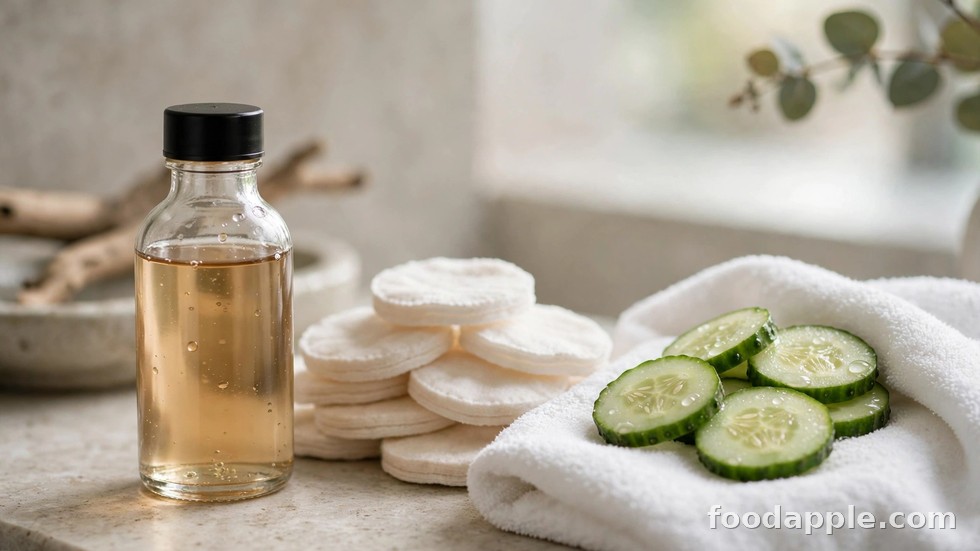
Method: Combine in a clean glass bottle and shake gently. Store in a cool, dark place for up to 2 weeks. Apply with a cotton pad after cleansing, morning and evening. The tea tree oil adds extra antibacterial power, while witch hazel helps control excess oil.
Overnight Spot Treatment Method
For individual stubborn pimples: dip a cotton swab in diluted ACV (1:2), press it onto the blemish for 30 seconds, and let it dry. You can leave the residue on overnight under moisturizer. The antibacterial action works while you sleep, and many users wake up to a visibly calmer, smaller spot. Never apply undiluted ACV directly — even as a spot treatment, the burn risk is real.
ACV vs Commercial Exfoliants
How does a kitchen staple stack up against store-bought AHAs? Commercial glycolic and lactic acid serums are more concentrated and precisely formulated — typically 5–10% AHA at a controlled pH — so they exfoliate faster and more predictably. ACV’s natural AHA content is much lower (under 1%), making it gentler but slower. The trade-off: ACV costs pennies per use, contains no synthetic fragrances or preservatives, and doubles as an antibacterial toner — something most AHA serums don’t do. For sensitive skin or beginners, ACV’s mildness is actually an advantage: less risk of over-exfoliation. For stubborn melasma or deep hyperpigmentation, a dermatologist-grade product (or professional peel) will outperform it. Many people use both: ACV as a daily gentle toner, and a proper AHA serum 1–2 times weekly for deeper exfoliation.
Safety Rules: Avoiding Burns and Irritation
- Always dilute — undiluted ACV can cause chemical burns, especially on sensitive skin.
- Patch test first — apply to your jawline and wait 24 hours before full-face use.
- Avoid broken skin — never use on open wounds, eczema patches, or freshly picked pimples.
- Keep away from eyes — rinse immediately with water if contact occurs.
- Stop if irritated — persistent redness, peeling, or stinging means your dilution is too strong or ACV isn’t right for your skin.
- Sun protection is mandatory — AHAs increase photosensitivity; use SPF 30+ daily.
Frequently Asked Questions
Can I leave apple cider vinegar on my face overnight?
Only in diluted form as a spot treatment on individual blemishes. Never leave undiluted ACV on your whole face overnight — the prolonged acid exposure can cause burns and irritation.
How long does it take for ACV to fade dark spots?
Typically 4–8 weeks of consistent use. Deeper or older spots take longer. Daily sunscreen is essential — without it, new pigmentation will outpace the fading.
Is ACV good for oily skin?
Yes — ACV’s astringent properties help balance excess oil production. Oily skin types often tolerate slightly stronger dilutions (1:2), but still start at 1:3.
Can ACV make acne worse?
Some people experience a brief “purging” phase as exfoliation brings congestion to the surface. If breakouts worsen after 2 weeks or you develop irritation, stop using it — your skin barrier may be compromised.
1 thought on “Apple Cider Vinegar for Skin Care: How to Treat Acne and Dark Spots”