
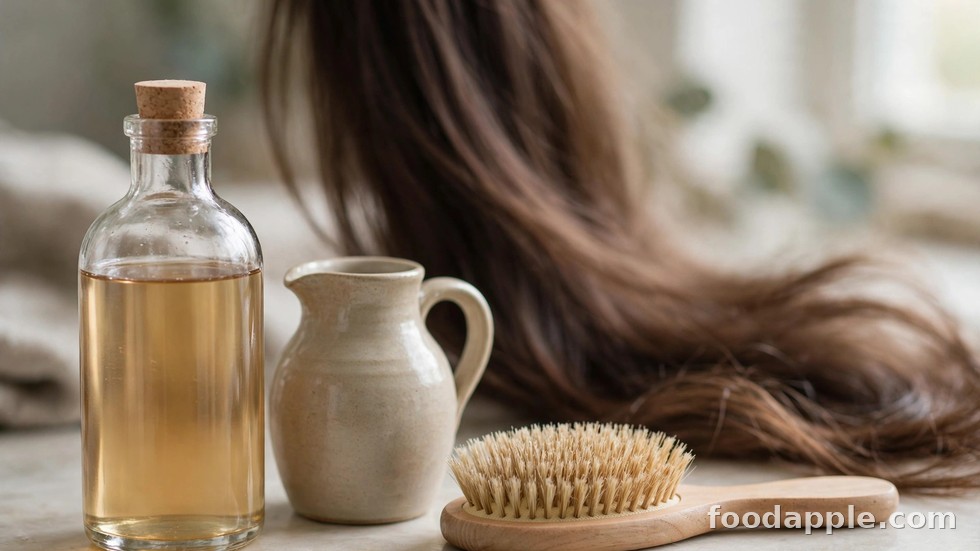
Dull hair, itchy scalp, stubborn dandruff — the drugstore aisle offers a hundred promises, but one of the most effective hair treatments might already be in your kitchen. An apple cider vinegar hair rinse is a centuries-old remedy that modern hair science increasingly supports. ACV’s acidity smooths the hair cuticle for mirror-like shine, rebalances scalp pH, fights the yeast behind dandruff, and removes product buildup without harsh detergents. This guide gives you the exact recipes, methods, and schedules for every hair type — so you get salon-level shine without the salon bill.
- Why ACV Works for Hair: The Science
- 5 Proven Benefits for Hair and Scalp
- The Basic ACV Rinse Recipe
- Customizing by Hair Type
- ACV for Dandruff: The Anti-Flake Protocol
- How Often Should You Rinse?
- ACV Rinse vs Clarifying Shampoo
- Mistakes to Avoid
- Frequently Asked Questions
Why ACV Works for Hair: The Science
Each hair strand is covered in overlapping cuticle scales. When these lie flat, hair looks shiny and smooth; when raised (by alkaline shampoos, heat, or damage), hair looks frizzy and dull. Hair’s ideal pH is around 4.5–5.5, but most shampoos are alkaline (pH 7+), which lifts the cuticle. ACV, at pH ~3, re-acidifies the hair shaft, snapping those cuticle scales shut. The result is instantly smoother, shinier, less tangled hair — no silicones required.
5 Proven Benefits for Hair and Scalp
- Mirror shine: Flattened cuticles reflect light evenly — the physics of glossy hair.
- Dandruff control: ACV’s acidity creates a scalp environment hostile to Malassezia, the yeast behind most dandruff.
- Less frizz: Sealed cuticles mean less moisture escaping and less humidity entering.
- Product buildup removal: The mild acid dissolves silicone and mineral buildup without harsh sulfates.
- Itch relief: Rebalanced scalp pH calms the itchiness that accompanies dryness and flaking.
The Basic ACV Rinse Recipe
- 2 tablespoons raw, unfiltered ACV
- 2 cups (500 ml) cool or lukewarm water
- Optional: 3–4 drops rosemary or lavender essential oil for scent and scalp benefits
Method:
- Step 1: Shampoo as normal and rinse thoroughly.
- Step 2: Pour the ACV mixture slowly over your scalp and hair, massaging the scalp for 30–60 seconds.
- Step 3: Leave on for 2–3 minutes — no longer needed.
- Step 4: Rinse with cool water. The vinegar smell disappears completely as hair dries.
- Step 5: Condition only the ends if your hair is dry; skip conditioner on the scalp.
Customizing by Hair Type
- Oily hair/scalp: Use the full 2-tablespoon strength; rinse twice weekly.
- Dry or damaged hair: Reduce to 1 tablespoon per 2 cups water; always condition afterward.
- Curly/coily hair: Use 1 tablespoon strength; the pH sealing enhances curl definition and reduces frizz.
- Color-treated hair: ACV is generally color-safe and may even extend color vibrancy by sealing the cuticle — but do a strand test first, and avoid overuse on freshly bleached hair.
- Fine hair: Lighter dilution (1 tablespoon); ACV adds volume by removing buildup that weighs hair down.
ACV for Dandruff: The Anti-Flake Protocol
For active dandruff, use a slightly stronger approach: mix equal parts ACV and water in a spray bottle. After shampooing, spray directly onto the scalp (not the lengths), massage for one minute, and leave for 15 minutes before rinsing. Repeat twice weekly for 3–4 weeks. The acidity disrupts the Malassezia yeast’s preferred alkaline environment while gently exfoliating flakes. Most people see significant flake reduction within 2–3 weeks. If dandruff is severe, greasy, or accompanied by red patches, see a dermatologist — it may be seborrheic dermatitis needing medical treatment.
How Often Should You Rinse?
Once a week is the sweet spot for most people — enough to maintain shine and scalp balance without over-acidifying. Oily scalps or active dandruff can go to twice weekly. Daily use is unnecessary and may dry out hair over time, especially on longer lengths. Think of the ACV rinse as a clarifying treatment, not a daily conditioner replacement — quality over frequency wins here.
ACV Rinse vs Clarifying Shampoo
Both remove buildup — but they work very differently. Clarifying shampoos use strong surfactants (detergents) that strip everything: product residue, oils, and some of your hair’s natural moisture. They’re effective but can leave hair feeling squeaky-dry, especially with frequent use. An ACV rinse dissolves buildup through mild acidity instead of detergents, while simultaneously sealing the cuticle and rebalancing pH — two things clarifying shampoos don’t do. The result is cleaner-feeling hair without the straw-like aftermath. The trade-off is strength: for heavy silicone or hard-water mineral buildup, a clarifying shampoo works faster. A smart routine uses ACV weekly for maintenance and a clarifying shampoo only once a month (or when hair feels truly coated). Your hair gets the best of both without the damage of over-clarifying.
Mistakes to Avoid
- Using it undiluted — can irritate the scalp and dry out hair shafts.
- Leaving it on too long — 2–3 minutes is plenty for a rinse; longer adds no benefit.
- Hot water mixing — use cool or lukewarm water to protect raw ACV’s beneficial compounds.
- Expecting instant dandruff cure — give the protocol 3–4 weeks of consistent use.
- Skipping the rinse-out — always rinse; leaving ACV in can leave hair feeling straw-like.
Frequently Asked Questions
Will my hair smell like vinegar after the rinse?
No. The vinegar scent evaporates completely as your hair dries. If you are sensitive to it, add a few drops of essential oil to the rinse.
Can ACV damage my hair?
When properly diluted, ACV is gentler than most commercial clarifying shampoos. Damage only occurs with undiluted use or extreme overuse on already fragile hair.
Is ACV safe for color-treated hair?
Generally yes. The cuticle-sealing effect can actually help lock in color. Do a strand test first, and wait 72 hours after fresh coloring before your first rinse.
Can ACV help with hair loss?
ACV improves scalp health, which supports healthy growth conditions — but there is no evidence it regrows hair or treats pattern baldness. See a dermatologist for hair loss concerns.
The takeaway: an apple cider vinegar rinse is one of the simplest, cheapest upgrades you can make to your hair care routine. It will not transform damaged hair overnight, but with consistent weekly use most people notice better shine, less buildup, and a calmer, healthier-feeling scalp within a month. Start with the basic dilution, pay attention to how your hair responds, and adjust the strength or frequency to suit your hair type.
1 thought on “How to Use ACV as a Natural Hair Rinse for Shiny, Dandruff-Free Hair”