
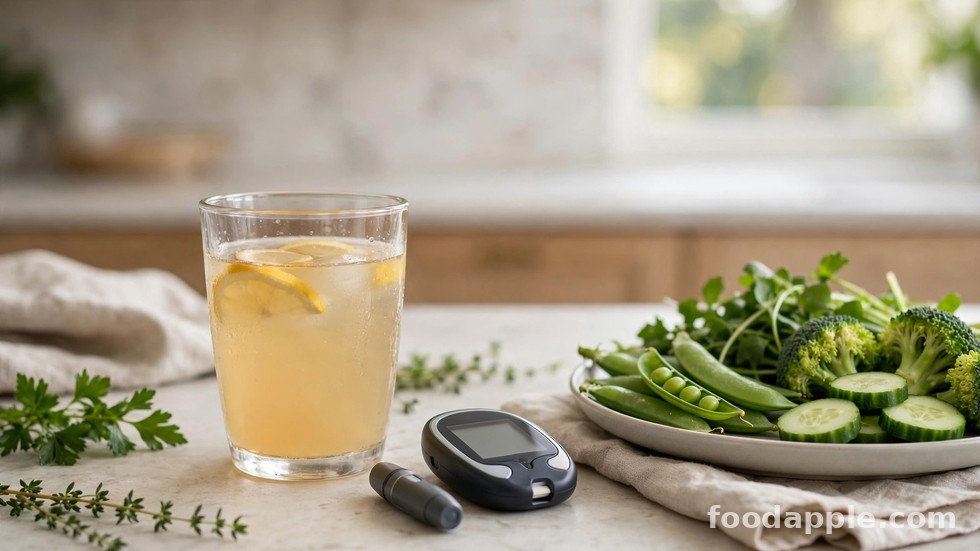
If you have diabetes, you’ve probably heard that apple cider vinegar can help control blood sugar. The early research is genuinely promising — but “natural” doesn’t automatically mean safe, especially when you’re managing a condition with medication. Can diabetics safely consume apple cider vinegar daily?
This guide gives you the full, honest picture: what clinical studies show about ACV and blood sugar, the realistic benefits and limits, critical medication interactions (especially insulin), safe daily dosages, and the rules for using ACV responsibly alongside your diabetes management plan.
Table of Contents
- What Clinical Studies Show About ACV and Blood Sugar
- How ACV May Lower Blood Sugar
- Realistic Benefits — and Hard Limits
- Medication Interactions: The Critical Warning
- Safe Daily Dosage for Diabetics
- Best Practices for Diabetic Use
- Who Should Avoid ACV
- Frequently Asked Questions
What Clinical Studies Show About ACV and Blood Sugar
Several small human trials have tested vinegar’s effect on glucose. In one well-known study, people with insulin resistance who drank vinegar before a high-carb meal saw significantly lower post-meal blood sugar and insulin compared to placebo. Another trial found that 2 tablespoons of ACV at bedtime modestly reduced morning fasting glucose in type 2 diabetics.
A meta-analysis of clinical trials concluded that vinegar consumption is associated with reduced postprandial glucose and insulin responses. However — and this matters — these studies are small, short-term, and use varying doses. No large, long-term trial has proven ACV as a diabetes treatment, and effects are modest, not dramatic.
How ACV May Lower Blood Sugar
- Slows stomach emptying — food reaches the bloodstream more gradually, flattening glucose spikes
- Inhibits carb-digesting enzymes — acetic acid may partially block enzymes that break down starches into sugar
- Improves insulin sensitivity — vinegar appears to help muscle cells take up glucose more efficiently
- Reduces liver glucose output — preliminary evidence suggests less sugar released by the liver overnight
Realistic Benefits — and Hard Limits
Used sensibly, ACV may offer diabetics modest improvements: slightly lower post-meal spikes, marginally better fasting glucose, and a simple habit that reinforces mindful eating. For prediabetics, these small edges — combined with diet and exercise — could be meaningful.
But be clear about the limits: ACV is not a diabetes treatment. It cannot replace medication, its effects are small (think a few points on your glucose reading, not dozens), and it does nothing for the underlying insulin resistance without lifestyle change. Anyone claiming ACV “reverses diabetes” is selling something.
Medication Interactions: The Critical Warning
This is the most important section for diabetics. ACV can amplify the blood-sugar-lowering effects of diabetes medications, potentially causing hypoglycemia (dangerously low blood sugar). Be especially careful with:
- Insulin — the highest-risk combination; ACV plus insulin can drive glucose too low
- Sulfonylureas (glipizide, glyburide, glimepiride) — these stimulate insulin release and pair risky with ACV
- Diuretics — ACV can lower potassium; combined with potassium-wasting diuretics this can become dangerous
- Digoxin — low potassium increases digoxin toxicity risk
Always talk to your doctor before starting daily ACV if you take any diabetes medication. You may need to monitor glucose more closely or adjust doses — a decision only your physician should make.
Safe Daily Dosage for Diabetics
The doses used in studies translate to 1–2 tablespoons (15–30 ml) of ACV per day, always diluted in a large glass of water. Start with 1 teaspoon daily for a week, monitoring your glucose, before working up. Never exceed 2 tablespoons — more is not better and increases side-effect risk.
Best timing: before your highest-carb meal or at bedtime (the two timings with the most study support). Always take it with or near food, never on a completely empty stomach if you’re on glucose-lowering drugs.
Keep a simple log during your first month: note your dose, timing, and glucose readings before and two hours after meals. This data is invaluable — it shows you (and your doctor) whether ACV is actually moving your numbers, and by how much. If after 4–6 weeks there’s no measurable difference, there’s little reason to continue; your effort is better spent on proven strategies like meal timing, fiber intake, and consistent activity.
Best Practices for Diabetic Use
- Get medical clearance first — non-negotiable if you take diabetes medication
- Monitor glucose closely for the first 2–4 weeks, especially before driving or sleeping
- Use raw, unfiltered ACV with the mother — the type used in most research
- Protect your teeth — use a straw and rinse with water; diabetes already raises dental risks
- Watch for delayed stomach emptying — diabetics with gastroparesis should avoid ACV
- Keep it as a complement, never a replacement for prescribed treatment
Who Should Avoid ACV
- Type 1 diabetics — hypoglycemia risk is higher and less predictable; only with endocrinologist supervision
- Anyone with gastroparesis — common in long-standing diabetes; ACV slows emptying further
- People with kidney disease — impaired kidneys handle acid and potassium shifts poorly
- Those with a history of hypoglycemia unawareness — added glucose-lowering is especially dangerous
Frequently Asked Questions
Can diabetics drink apple cider vinegar every day?
Many can, at 1–2 tablespoons diluted in water daily — but only with their doctor’s knowledge, especially if taking insulin or other glucose-lowering drugs. Daily use requires glucose monitoring to catch any hypoglycemia.
How much does ACV lower blood sugar?
Modestly. Studies show reductions in post-meal glucose of roughly 20–35% in some trials, but results vary widely and studies are small. Think of it as a small helper, not a treatment — diet, exercise, and medication do the heavy lifting.
Can ACV replace my diabetes medication?
Absolutely not. ACV’s effects are far too small and inconsistent to replace proven medications. Stopping prescribed diabetes drugs in favor of vinegar is dangerous and could lead to serious complications. Never adjust medication without your doctor.
Is ACV safe for prediabetes?
For most prediabetics not on medication, diluted ACV is low-risk and may modestly help post-meal glucose. Combined with diet changes and exercise, it can be part of a sensible prevention strategy — but lifestyle change matters far more.
Should I take ACV before meals or at bedtime?
Both timings have study support: before meals for post-meal spikes, at bedtime for morning fasting glucose. Choose based on your main problem area, or discuss with your doctor which pattern fits your glucose logs.