
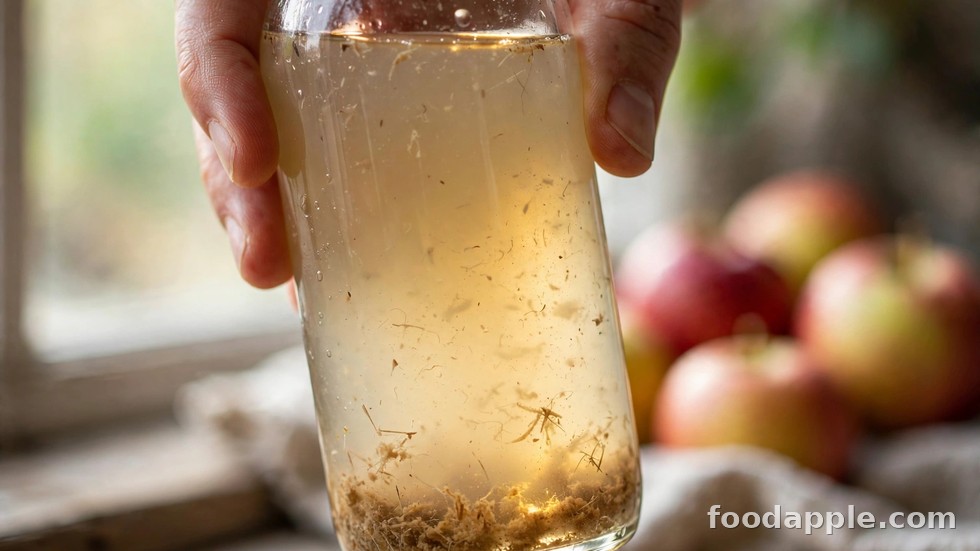
Pick up a bottle of raw apple cider vinegar and you will notice something floating inside — cloudy strands and cobweb-like blobs. That murky substance is called the “mother,” and far from being a flaw, it is what makes unfiltered ACV special.
In this guide, we explain exactly what the mother of vinegar is, how it forms, how it differs from filtered vinegar, what benefits it may offer, and how to spot a genuine raw ACV at the store. By the end, you will know exactly why cloudy vinegar is worth paying for.
Table of Contents
- What Exactly Is the Mother of Vinegar?
- How the Mother Forms: The Fermentation Story
- Mother vs Filtered: What’s the Real Difference?
- Potential Benefits of the Mother
- How to Spot Genuine Raw ACV
- Can You Use the Mother Itself?
- Storing ACV to Protect the Mother
- Frequently Asked Questions
What Exactly Is the Mother of Vinegar?
The mother is a gelatinous, cloudy mass of cellulose and acetic acid bacteria — the living culture responsible for turning alcohol into vinegar. It looks like floating strands, wispy cobwebs, or a jelly-like disc, and it gives raw ACV its signature murky appearance.
Chemically, the mother is mostly bacterial cellulose produced by Acetobacter bacteria, tangled together with live bacteria, enzymes, and proteins. It is completely natural, harmless, and edible. Think of it like the SCOBY in kombucha or the culture in yogurt — a living colony of beneficial microbes.
Filtered, distilled vinegars have the mother removed and the vinegar pasteurized, leaving a crystal-clear liquid. That clarity comes at a cost: most of the live cultures, enzymes, and beneficial compounds go with it.
How the Mother Forms: The Fermentation Story
The mother is born through a two-stage fermentation process that transforms simple apple juice into vinegar:
- Stage 1 — Alcoholic fermentation: Yeasts consume the natural sugars in crushed apples and convert them into alcohol, creating a hard apple cider.
- Stage 2 — Acetic fermentation: Acetic acid bacteria (Acetobacter) feed on the alcohol and convert it into acetic acid — the compound that gives vinegar its sharp taste and most of its health properties.
- Mother formation: As the bacteria work, they produce cellulose that clumps into the visible mother. Given time and oxygen, it keeps growing — which is why old bottles of raw ACV often develop a thicker mother.
This slow process takes weeks to months. Mass-produced filtered vinegars speed it up, then strip out the culture — efficient, but poorer in beneficial compounds.
Mother vs Filtered: What’s the Real Difference?
Both types contain acetic acid, so both work for cooking and cleaning. But nutritionally, they are not the same product:
- Appearance: Raw ACV is cloudy with visible strands; filtered ACV is crystal clear.
- Live cultures: Raw ACV contains live acetic acid bacteria and enzymes; filtered is pasteurized and sterile.
- Polyphenols: Raw, unfiltered ACV retains more antioxidant polyphenols from the apples, which filtration removes.
- Minerals and amino acids: Trace amounts of potassium, amino acids, and enzymes survive in raw ACV but are reduced by processing.
- Taste: Raw ACV has a deeper, more complex, slightly fruity flavor; filtered tastes sharper and one-dimensional.
- Price: Raw ACV costs more, reflecting the slower process and living culture.
For health purposes, raw and unfiltered wins clearly. For pickling or cleaning, the cheaper filtered kind is perfectly fine.
Potential Benefits of the Mother
Most vinegar research focuses on acetic acid, which both types contain. But the mother adds extras that researchers find interesting:
- Probiotic-like bacteria: The live Acetobacter cultures may support gut microbial diversity, though they are not classic probiotics like Lactobacillus.
- Prebiotic compounds: The bacterial cellulose and pectin remnants can feed beneficial gut bacteria.
- Antioxidant activity: Higher polyphenol content means better protection against oxidative stress compared to filtered vinegar.
- Enzymes and proteins: Raw ACV contains trace enzymes from fermentation that are destroyed by pasteurization.
Be skeptical of claims that the mother alone cures diseases — the evidence for the mother specifically is still emerging. But raw ACV gives you the full spectrum of fermentation compounds, not just the acid.
How to Spot Genuine Raw ACV
Marketing labels can be misleading. Here is how to tell the real thing from clever packaging:
- Look for cloudiness: Genuine raw ACV is murky, never crystal clear. Hold it up to the light — you should see strands or sediment.
- Read the label: It should say “raw,” “unfiltered,” and “unpasteurized” — ideally all three.
- Check for “with the mother”: Reputable brands state this explicitly.
- Shake the bottle: The sediment should swirl and slowly resettle — a good sign of a living culture.
- Simple ingredients: The ingredient list should be just apples or apple juice and water — no added flavors, colors, or preservatives.
- Acidity around 5%: Quality ACV lists its acidity; 5% is the standard for culinary and health use.
Can You Use the Mother Itself?
Yes — the mother is edible and reusable. Some people swallow small pieces of it directly, though it has an intense, slimy texture most find unpleasant. Its real value is as a starter culture.
Drop a piece of mother into sweetened apple juice or diluted alcohol, and it will kickstart a new batch of homemade vinegar — the same way a sourdough starter seeds new bread. Home vinegar makers treasure a healthy mother and pass pieces between batches for years.
If your bottle’s mother grows thick enough to pour poorly, simply strain it out through cheesecloth. The vinegar itself is perfectly fine — the mother is a sign of life, not spoilage.
Storing ACV to Protect the Mother
To keep the culture alive and the vinegar at its best, store raw ACV in a cool, dark place like a pantry — not in direct sunlight. Refrigeration is unnecessary and can slow the beneficial bacteria.
Always keep the cap tightly closed to limit oxygen exposure, and give the bottle a gentle shake before each use to distribute the mother. Stored properly, raw ACV keeps for years — the mother may keep growing, which is completely normal.
Frequently Asked Questions
Is it safe to drink the mother in ACV?
Yes, the mother is completely safe to consume. It is a natural colony of acetic acid bacteria and cellulose — similar to the cultures in yogurt or kombucha. Most people simply shake the bottle and drink it mixed into the vinegar.
Should I strain the mother out of my ACV?
There is no need to remove it — it is the most nutritious part. Only strain it if it grows so thick that pouring becomes difficult. Even then, save the piece to start your own homemade vinegar batch.
Does the mother mean my vinegar has gone bad?
No — the opposite. A growing mother means the vinegar is alive and unpasteurized. Vinegar is self-preserving due to its acidity, so it does not spoil in the normal sense. Cloudiness and sediment are signs of quality, not decay.
Can I grow a mother in filtered vinegar?
No. Filtered, pasteurized vinegar has no live bacteria left to form a mother. You need raw, unfiltered ACV — or a piece of mother from someone else’s batch — to start the culture.