
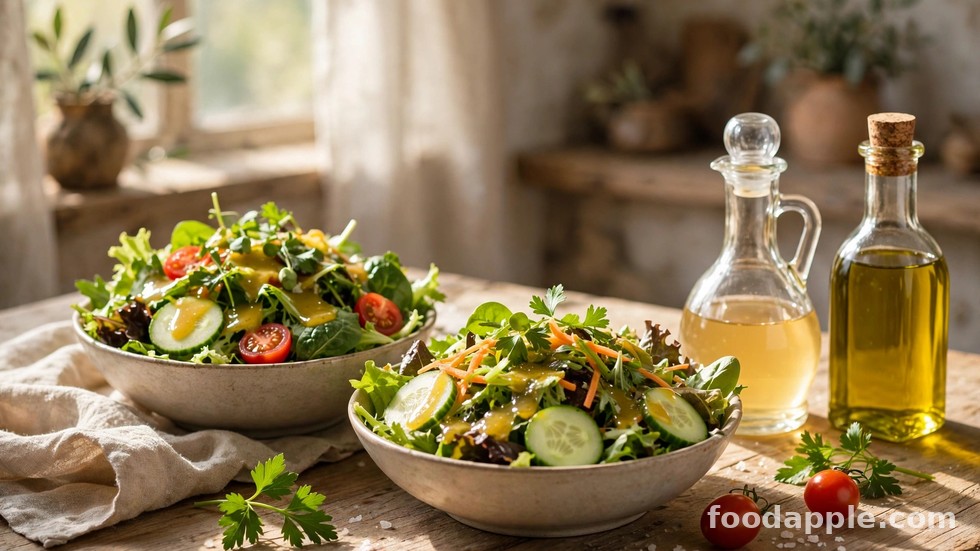
Store-bought salad dressings are one of the sneakiest sources of hidden sugar, seed oils, and preservatives in a “healthy” diet. A single serving can pack more sugar than a cookie — completely defeating the purpose of your beautiful bowl of greens. The good news? A bottle of apple cider vinegar and five minutes of whisking is all it takes to make dressings that taste better, cost less, and actually add nutritional value to your meal.
In this guide, you’ll discover why apple cider vinegar is the perfect dressing base, the foolproof 3-2-1 vinaigrette formula, and 5 easy healthy recipes — from classic honey Dijon to creamy ranch. Plus: storage tips to keep them fresh for weeks.
Table of Contents
- Why ACV Makes the Best Salad Dressing Base
- The Foolproof 3-2-1 Vinaigrette Formula
- Recipe 1: Classic Honey Dijon ACV Vinaigrette
- Recipe 2: Creamy Greek Yogurt ACV Ranch
- Recipe 3: Asian Sesame-Ginger ACV Dressing
- Recipe 4: Lemon Herb ACV Dressing
- Recipe 5: Sweet Apple Cinnamon ACV Dressing
- Storing and Serving Tips
- Frequently Asked Questions
Why ACV Makes the Best Salad Dressing Base
Apple cider vinegar brings a mild, fruity acidity that is far less harsh than distilled white vinegar or even red wine vinegar. Its gentle tang brightens vegetables without overpowering delicate greens, and its subtle apple notes pair naturally with both sweet and savory ingredients.
Beyond flavor, ACV may add a small nutritional edge: studies suggest vinegar with meals can modestly improve fullness and blunt post-meal blood sugar spikes. Swapping a sugary bottled dressing for an ACV vinaigrette is a genuinely healthier habit.
Homemade ACV dressings are also cheaper and cleaner. A batch costs a fraction of a premium bottled dressing and contains zero stabilizers, added sugars, or mystery “natural flavors.” You control the oil, the salt, and the sweetness.
The Foolproof 3-2-1 Vinaigrette Formula
Before the five recipes, learn this simple ratio and you can improvise dressings forever: 3 parts oil, 2 parts apple cider vinegar… no — the classic ratio is 3 parts oil to 1 part vinegar, plus salt, pepper, and one flavor booster (mustard, honey, garlic, or herbs).
- 3 parts extra-virgin olive oil — the smooth, healthy-fat base
- 1 part raw apple cider vinegar — the bright, tangy acid
- 1 emulsifier — a teaspoon of Dijon mustard or honey helps oil and vinegar stay mixed
- Salt, pepper, and aromatics — garlic, shallots, or fresh herbs to taste
Whisk in a bowl or shake in a jar. Too sharp? Add oil or sweetener; too flat? Add vinegar. Taste and adjust — that is the whole secret.
Recipe 1: Classic Honey Dijon ACV Vinaigrette
The workhorse dressing for garden salads, grain bowls, and roasted vegetables — honey rounds out the vinegar’s edge while Dijon keeps the emulsion silky.
Ingredients
- 1/3 cup extra-virgin olive oil
- 3 tablespoons raw apple cider vinegar
- 1 tablespoon Dijon mustard
- 1 tablespoon raw honey
- 1 small garlic clove, minced
- 1/2 teaspoon sea salt and 1/4 teaspoon black pepper
Instructions
- Whisk the vinegar, mustard, honey, garlic, salt, and pepper in a small bowl.
- Slowly drizzle in the olive oil while whisking constantly until creamy.
- Taste and adjust honey or salt. Keeps 2 weeks in the fridge.
Recipe 2: Creamy Greek Yogurt ACV Ranch
All the herby comfort of ranch without the soybean oil: Greek yogurt plus ACV creates a high-protein, tangy dressing that doubles as a veggie dip.
Ingredients
- 1/2 cup plain Greek yogurt (full-fat for richness)
- 2 tablespoons raw apple cider vinegar
- 1 tablespoon olive oil
- 1 teaspoon dried dill and 1 teaspoon dried parsley
- 1/2 teaspoon garlic powder and 1/2 teaspoon onion powder
- Salt and pepper to taste
Instructions
- Whisk the yogurt, vinegar, and olive oil until smooth.
- Stir in the herbs and spices. Thin with a tablespoon of water if needed.
- Chill 30 minutes for flavors to meld. Keeps 1 week refrigerated.
Recipe 3: Asian Sesame-Ginger ACV Dressing
Bright, nutty, and a little spicy — this dressing transforms cabbage slaws, noodle salads, and edamame bowls. The ginger adds a warming kick that pairs beautifully with ACV’s fruitiness.
Ingredients
- 1/4 cup toasted sesame oil
- 3 tablespoons raw apple cider vinegar
- 1 tablespoon low-sodium soy sauce or tamari
- 1 tablespoon grated fresh ginger
- 1 teaspoon honey or maple syrup
- 1/2 teaspoon chili flakes (optional)
Instructions
- Combine everything in a jar and shake vigorously for 30 seconds.
- Let sit 10 minutes so the ginger infuses. Shake again before serving.
- Keeps 2 weeks in the fridge; bring to room temp before pouring.
Recipe 4: Lemon Herb ACV Dressing
A light, fresh dressing for spring greens or grilled fish — lemon and ACV create a double-citrus brightness that makes simple ingredients sing.
Ingredients
- 1/3 cup extra-virgin olive oil
- 2 tablespoons raw apple cider vinegar
- 2 tablespoons fresh lemon juice
- 1 teaspoon lemon zest
- 2 tablespoons chopped fresh parsley and basil
- 1/2 teaspoon sea salt and 1/4 teaspoon black pepper
Instructions
- Whisk the vinegar, lemon juice, zest, salt, and pepper.
- Stream in the olive oil, then stir in the fresh herbs.
- Best used fresh; keeps 5 days refrigerated.
Recipe 5: Sweet Apple Cinnamon ACV Dressing
A fall-inspired, surprisingly versatile dressing for kale, roasted squash, or spinach-apple salad. Cinnamon adds warmth and may help curb sugar cravings.
Ingredients
- 1/3 cup avocado oil or light olive oil
- 3 tablespoons raw apple cider vinegar
- 1 tablespoon maple syrup
- 1/2 teaspoon ground cinnamon
- 1/4 teaspoon Dijon mustard
- Pinch of sea salt
Instructions
- Whisk all ingredients in a bowl until well combined.
- Let rest 15 minutes so the cinnamon fully dissolves.
- Keeps 2 weeks in the fridge; shake well before each use.
Storing and Serving Tips
Store dressings in glass jars with tight lids in the refrigerator: oil-based vinaigrettes last 2–3 weeks, yogurt or fresh-herb versions about a week. If cold olive oil solidifies, let the jar sit at room temperature for 15 minutes and shake.
Portion smart: two tablespoons is a standard serving, roughly 60–90 calories for oil-based dressings and under 40 for the yogurt ranch. Always shake or whisk before pouring, since natural dressings separate without stabilizers.
Frequently Asked Questions
Can I use filtered ACV for salad dressings?
Yes, filtered ACV works fine in dressings where flavor matters most. Raw, unfiltered ACV with the “mother” adds a slightly deeper, more complex taste and a cloudy look, but the difference is subtle. Use whichever you have.
How long do homemade ACV dressings last?
Oil-and-vinegar dressings keep 2–3 weeks refrigerated thanks to the vinegar’s acidity. Creamy yogurt-based dressings should be used within a week, and dressings with lots of fresh herbs taste best within 5 days.
Are ACV dressings good for weight loss?
They can support weight management mainly by replacing high-calorie bottled dressings. Some research suggests vinegar with meals increases satiety slightly, but the biggest win is simply eating fewer hidden sugars and processed oils.
Can I make these dressings without oil?
Yes. Replace the oil with water, vegetable broth, or extra yogurt for an oil-free version. The texture will be thinner, so add a teaspoon of mustard or a date for body. Oil-free dressings should be used within 5–7 days.